
Chimney Sweep · Lancashire
Chimney Sweeping
Clean, safe flues — swept properly, with a certificate every time.
Regular sweeping is the single most important thing you can do to keep a fire or stove burning safely and efficiently. Over a season, soot, tar and creosote build up inside the flue — restricting the draw, wasting fuel and, at worst, feeding a chimney fire. We sweep open fires, wood-burning and multi-fuel stoves, Rayburns and Agas, and both lined and unlined flues, combining a rotary power sweep with traditional rods and a HEPA-filtered vacuum so the dust stays in the machine and not in your living room. Every sweep finishes with a draw test and an insurance-recognised certificate for your records.
What's included
- Full sweep of the flue from appliance to pot using rotary power sweeping and traditional rods
- HEPA-filtered vacuum and dust sheets throughout — your hearth left as clean as we found it
- Visual check of the flue, appliance, fireback and hearth for obvious faults
- Smoke draw test to confirm the flue is drawing correctly
- Insurance-recognised sweeping certificate issued on completion
- Honest advice on burning habits, fuel and how often to book your next sweep
The work up close
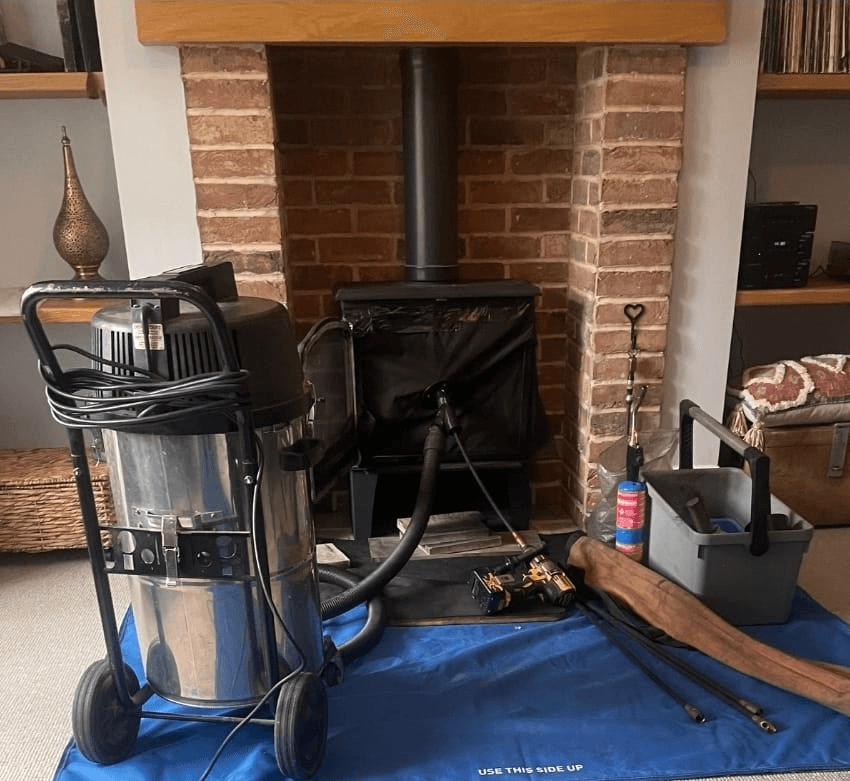
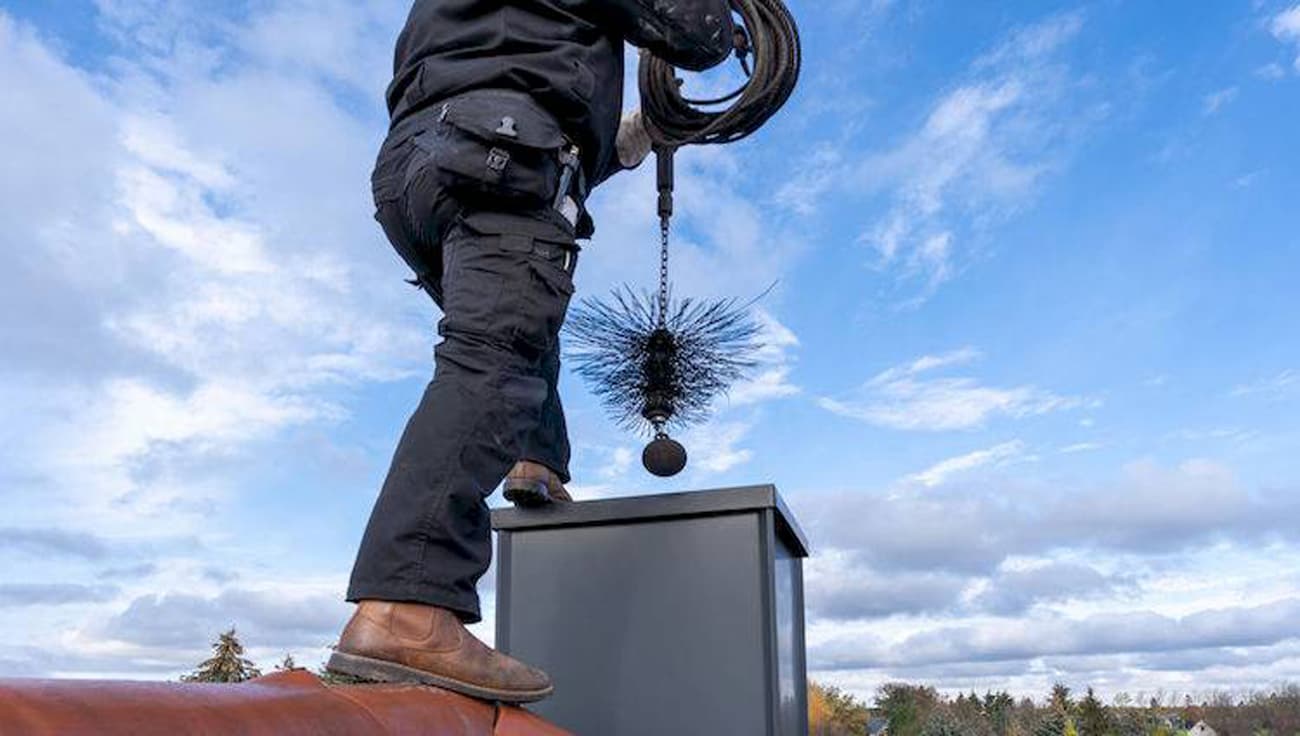
Sweeping a flue from the top down. 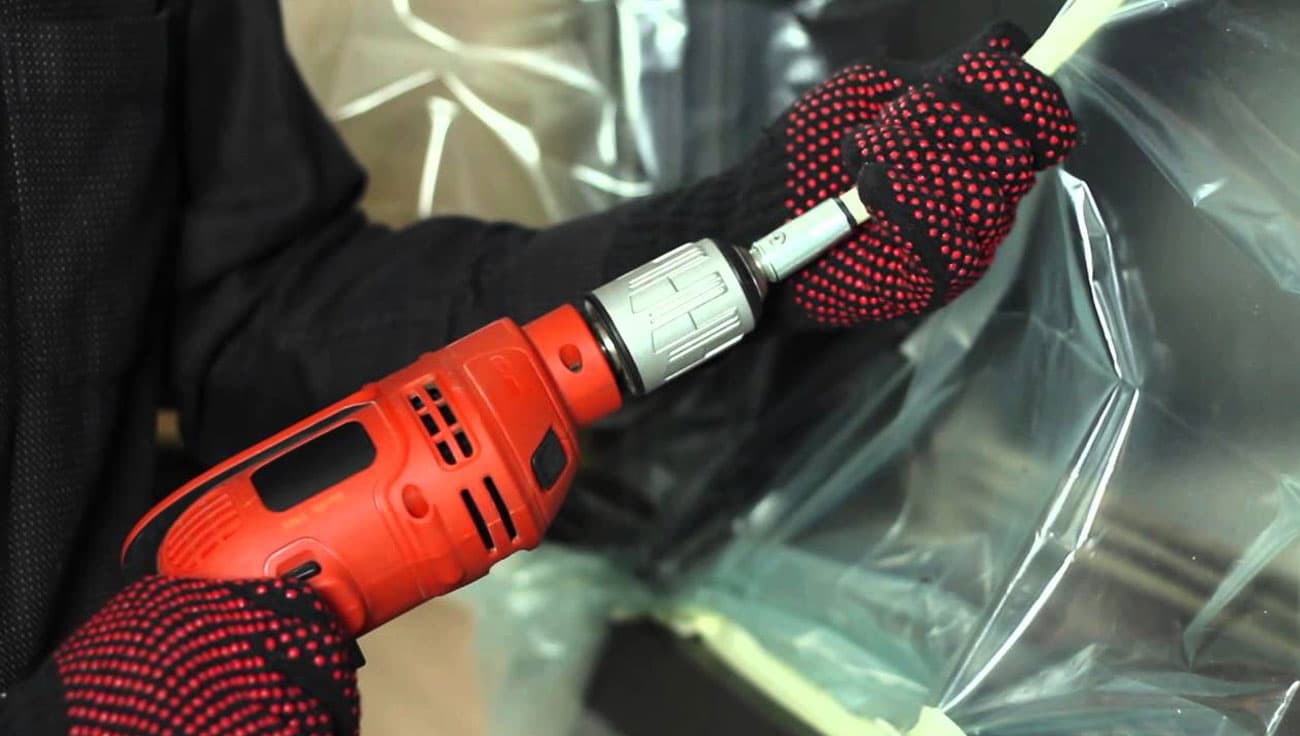
Rotary power sweeping — a flexible rod driven from a drill.
Frequently asked questions
- How often should I have my chimney swept?
- For regularly used wood or multi-fuel appliances, at least once a year — ideally before the heating season starts. Bituminous house coal and heavy wood burning can warrant twice a year, while gas and oil flues are typically once a year. We will give you a straight recommendation based on what we actually find in your flue.
- Will sweeping make a mess in my house?
- No. We seal the appliance opening, lay dust sheets and run a HEPA-filtered vacuum throughout the sweep, so the soot goes into the machine rather than into the room. In the vast majority of cases you would not know we had been, apart from a cleaner-drawing fire.
- How long does a chimney sweep take?
- A straightforward single flue usually takes around 45 minutes to an hour. Inglenooks, bird nests, heavy tar or appliances that need partial dismantling take longer — we will always tell you before we start if we expect anything out of the ordinary.
- Do I get a certificate?
- Yes. Every sweep is finished with an insurance-recognised certificate confirming the flue has been swept and tested. Many home insurers ask to see this in the event of a claim, and some require it as a condition of cover.
- Do I need to do anything before you arrive?
- Let the fire go completely cold for at least 24 hours, and clear a little space around the hearth so we can work. Moving ornaments and rugs from the immediate area helps, but we bring our own sheets and cover everything else ourselves.
Book your chimney sweeping
Tell us what you need and we'll arrange a visit. Established 2018, fully insured, and every job finished with a certificate.